How Professional Manufacturers Control Colour & Odour in Mushroom Extract Batches
Importing mushroom extracts from China has become a standard sourcing strategy for food, nutraceutical, and dietary supplement companies worldwide. China is the largest global producer of functional and medicinal mushrooms, supported by mature cultivation systems, large-scale extraction capacity, and competitive manufacturing costs.
However, for international buyers—especially those supplying the UK, EU, and US markets—batch-to-batch consistency in colour and odour remains one of the most sensitive quality concerns.
Mushroom extracts are natural botanical products, not synthetic chemicals. Some degree of variation is inevitable. The real issue for importers is not whether variation exists, but how it is controlled, evaluated, documented, and managed within agreed specifications.
This article explains in detail how to import mushroom extracts from China and how professional manufacturers ensure stable colour and odour across production batches, using practical industry systems rather than theoretical claims.
What Causes Colour Variation in Natural Mushroom Extracts?
Colour variation is one of the most visible quality concerns when importing mushroom extracts from China. Understanding the causes helps buyers set realistic and workable specifications.
Natural Variability of Raw Materials
Mushrooms are agricultural materials. Their colour is influenced by:
- Species and genetic strain
- Cultivation substrate
- Soil mineral content
- Humidity and temperature
- Altitude
- Seasonal harvest timing
- Maturity at harvest
Even when the same species is used, environmental changes can naturally affect pigment levels and bioactive compound concentration.
Influence of Bioactive Compounds
Different compounds contribute to colour differences:
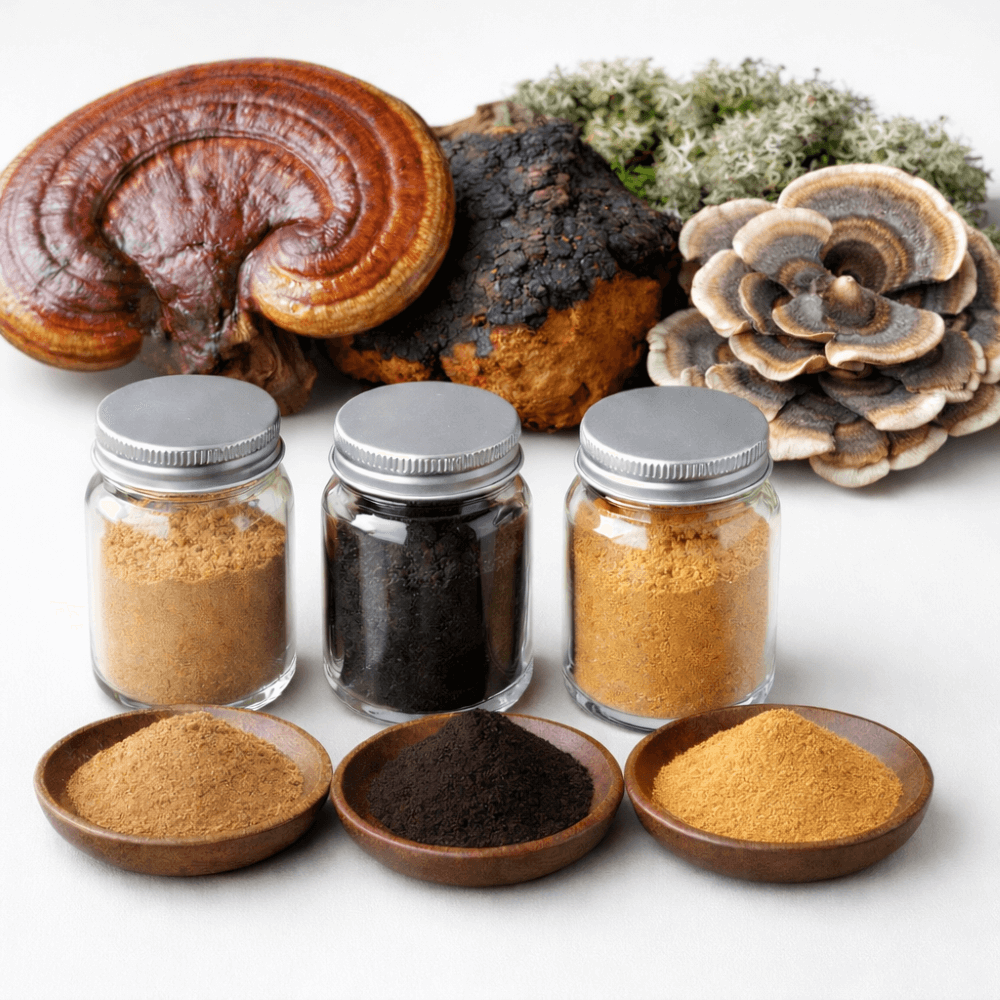
- Polysaccharides often result in lighter, cloudy, or milky tones
- Triterpenoids, especially in Reishi, contribute to red-brown colours
- Phenolics and pigments create yellow, gold, or dark brown shades
A higher concentration of specific compounds can deepen colour without indicating poor quality.
Extraction Parameters
Extraction conditions significantly influence final colour, including:
- Solvent selection (water or alcohol)
- Extraction temperature
- Processing time
- Concentration and evaporation steps
- Filtration and purification level
Alcohol extraction, for example, often produces darker extracts than hot water extraction due to broader compound solubility.
Drying and Milling Effects
Post-extraction processing also affects appearance:
- Spray drying versus vacuum drying
- Drying temperature profiles
- Particle size after milling
Ultra-fine powders may appear lighter due to light reflection, while coarser powders often appear darker.
How Do Manufacturers Control Colour Consistency?
Professional Chinese manufacturers apply layered control systems to manage colour variation.
Raw Material Standardisation
Colour consistency starts at the source:
- Fixed species and strain selection
- Defined cultivation regions
- Controlled harvest maturity
- Standardised post-harvest drying
Raw materials outside agreed parameters are rejected before extraction.
Fixed Extraction SOPs
Each product is produced using a locked Standard Operating Procedure (SOP), covering:
- Fixed solvent ratios
- Strict temperature limits
- Controlled extraction duration
- Defined concentration endpoints
Any deviation requires documented approval and investigation.
Use of Carriers
Carriers such as maltodextrin help stabilise:
- Colour tone
- Odour intensity
- Powder flowability
Maintaining a fixed carrier ratio is critical for visual consistency.
Visual Colour Standards
Many factories use:
- Approved reference photographs
- Samples from 1-2 previous batches are retained
- Side-by-side comparison under standardised lighting
Visual assessment remains essential because commercial acceptance is ultimately visual.
Lot Management and Re-Blending
When minor shade differences occur, manufacturers may:
- Blend compatible lots
- Adjust carrier ratios within specification
- Reprocess batches before release
How Do You Control Odour and Flavour Uniformity?
Odour consistency is just as important as colour, particularly for food and supplement applications.
Mushroom Odour Chemistry
Mushroom aroma is produced by volatile organic compounds, including:
- Alcohols
- Aldehydes
- Ketones
- Terpenes
Compounds such as 1-octen-3-ol are responsible for characteristic mushroom notes. Small concentration changes can noticeably affect odour strength.
Key Factors Influencing Odour
Odour variation is affected by:
- Drying temperature and time
- Oxidation during processing
- Microbial load
- Storage humidity
- Oxygen exposure
- Extraction and evaporation conditions
Microbial and Oxidation Control
Manufacturers ensure odour stability by:
- Maintaining strict microbial limits
- Using low-moisture drying processes
- Preventing oxygen exposure during storage
- Applying suitable protective packaging
Oxidation control is essential to avoid sour or rancid off-odours.
Sensory testing is used to verify consistency.
Sensory Evaluation
Trained quality control staff routinely assess:
- Colour appearance
- Odour intensity
These evaluations are always conducted against retained reference samples.
How Do You Document Batch-to-Batch Appearance Data?
Documentation is essential for international trade and long-term supplier relationships.
Batch Records and Traceability
Each batch includes records for:
- Raw material sources
- Processing parameters
- Quality control checks
- Sensory evaluation results
This allows fast root-cause analysis if issues arise.
Retained Samples
Manufacturers keep retained samples from:
- Approved reference batches
- Each production lot
These samples support future comparisons and dispute resolution.
Buyer-Facing Documentation
Importers may receive:
- Certificates of Analysis
- Batch photographs
However, experienced buyers always verify consistency through their own inspection.
Practical Steps for Importers to Ensure Consistency
From a buyer’s perspective, consistency control requires active participation.
Retain Approved Reference Samples
Keep your own reference samples and compare every incoming shipment.
Perform Incoming Inspection
Check colour and odour:
- Under consistent lighting
- At room temperature
- Before production use
Importing mushroom extracts from China is not inherently risky. The key is understanding that mushroom extracts are natural products with inherent variability. Colour and odour differences are normal within controlled ranges.
By defining specifications clearly, approving reference samples, working with experienced manufacturers, and performing proper incoming inspections, importers can achieve stable and repeatable quality.
In the global mushroom extract industry, consistency is not accidental. It is the result of controlled raw materials, standardised processes, trained people, and transparent documentation. When these systems are in place, importing mushroom extracts from China becomes a reliable and scalable sourcing strategy.